Wanfo Pavilion: A Journey to a Pure Land of Ten Thousand Buddhas on the Ancient City Wall

Wanfo Pavilion: A Journey to a Pure Land of Ten Thousand Buddhas on the Ancient City Wall

Overview: Shanghai's oldest Buddhist temple, built on the city wall.
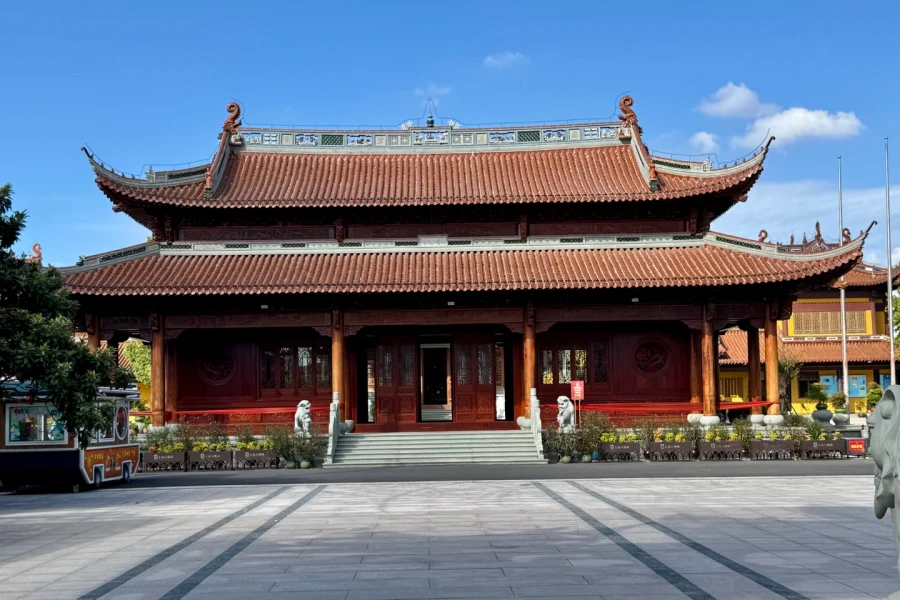
Wanfo Pavilion is a unique Buddhist temple with a history of over 600 years, originally built in the 19th year of the Hongwu reign of the Ming Dynasty (1386). Its main building was constructed directly on the north gate of the Ming Dynasty city wall and on the city wall itself, making it the only Buddhist pavilion in the Shanghai area that is integrated with the ancient city wall.

Key Highlights at a Glance
Identity tags: Shanghai's oldest Buddhist temple / Temple on the city wall / Temple with ten thousand golden Buddha statues
Core experiences: Witness the spectacular sight of ten thousand Buddhas paying homage to the Buddha, climb the ancient city wall to overlook the old city, and appreciate the unique architectural style.
Recommended visit duration: 1-2 hours
Address: North Gate of Fengcheng Town, Fengxian District, Shanghai (No. 70 Fengliang Road)

  • Wanfo Pavilion: A Journey to a Pure Land of Ten Thousand Buddhas on the Ancient City Wall-1
  • Wanfo Pavilion: A Journey to a Pure Land of Ten Thousand Buddhas on the Ancient City Wall-2
  • Wanfo Pavilion: A Journey to a Pure Land of Ten Thousand Buddhas on the Ancient City Wall-3
  • Wanfo Pavilion: A Journey to a Pure Land of Ten Thousand Buddhas on the Ancient City Wall-4

Origin: The defense of the garrison and the universal illumination of Buddha's light

Furong Ancient Town

The origin of the pavilion's name—the grand aspiration of "Ten Thousand Buddhas"
The name "Wanfo Pavilion" (Pavilion of Ten Thousand Buddhas) directly and solemnly points to its core meaning—"ten thousand Buddhas." This is not a figurative expression, but a specific reference to the number of Buddha statues enshrined within. The core hall of the temple houses a vast number of Buddha statues, with thousands of smaller, gilded Buddha images densely packed in its niches, collectively creating a breathtaking scene of "ten thousand Buddhas paying homage," thus showcasing the boundless power of Buddhism and the universal illumination of its light. Building the temple atop the city walls and gates also implicitly conveys the simple belief and aspiration to "use the power of Buddha to protect the land and its people."

The pulse of history—from defensive walls to spiritual refuge
The history of Wanfo Pavilion is closely intertwined with military defense and folk beliefs during the Ming and Qing dynasties.
- Foundation laid in the early Ming Dynasty (1386): To defend against Japanese pirates, the Ming government built the city wall of Fengcheng and constructed a Buddhist pavilion on the north gate, initially named "Wanfo Pavilion", which served both as a lookout and a place for prayer.
- Reconstruction and Prosperity in the Qing Dynasty: During the Qing Dynasty, the defensive function of the city walls weakened, and Buddhist activities became the mainstream. The city walls were rebuilt and expanded many times during the Qianlong and Xianfeng reigns, laying the foundation for the unique pattern of "temples on the city walls, and the city walls supporting the temples" today, and the incense offerings gradually flourished.
- Modern Decline and Contemporary Rejuvenation (20th Century to Present): Having endured the vicissitudes of time, both the city walls and the Buddhist pavilions suffered damage. In 1993, with government approval, it was reopened as a Buddhist activity site, and a large-scale restoration and reconstruction were carried out. In particular, the emergency repair of the ancient city wall itself in 2006 allowed this unique "city wall temple" to be completely preserved and revitalized.

In-depth understanding: Explore more unique religious architecture in China >> [Hanging Temple of Hengshan: A Buddhist temple on a cliff]

Must-see wonders: the majestic city walls and the solemnity of ten thousand Buddhas

Furong Ancient Town Furong Ancient Town Furong Ancient Town Furong Ancient Town

The Charm of Nature – A Tranquil View from the City Walls
The "natural" scenery of Wanfo Pavilion benefits from its unique, elevated location, offering a tranquil perspective for appreciating the ancient town's landscape.

Ancient city walls and old town scenery
The temple is situated atop the ruins of the ancient city wall at the North Gate of Fengcheng. Climbing the Buddhist pavilion or the city wall walkway offers panoramic views of the old town's streets and rooftops, with the skyline of Fengxian New City visible in the distance. The contrast between the past and present creates a breathtaking vista. The lush vegetation on both sides of the city wall adds a touch of gentle vitality to the weighty historical site.

The courtyard is quiet and secluded
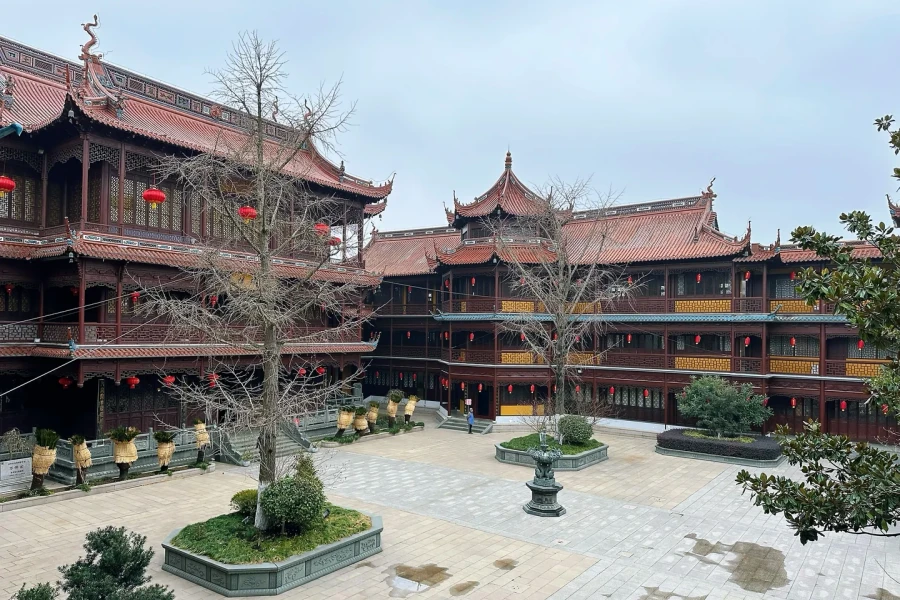
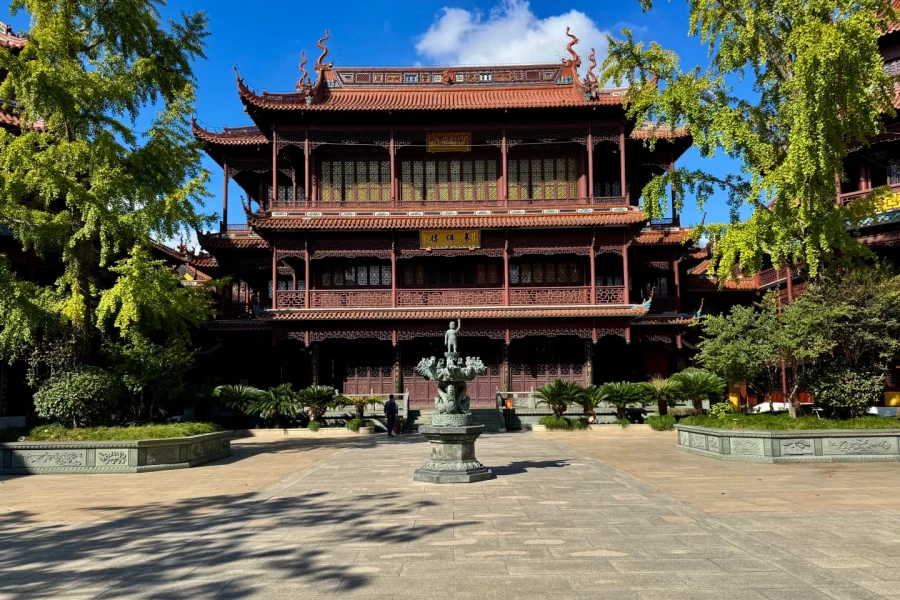
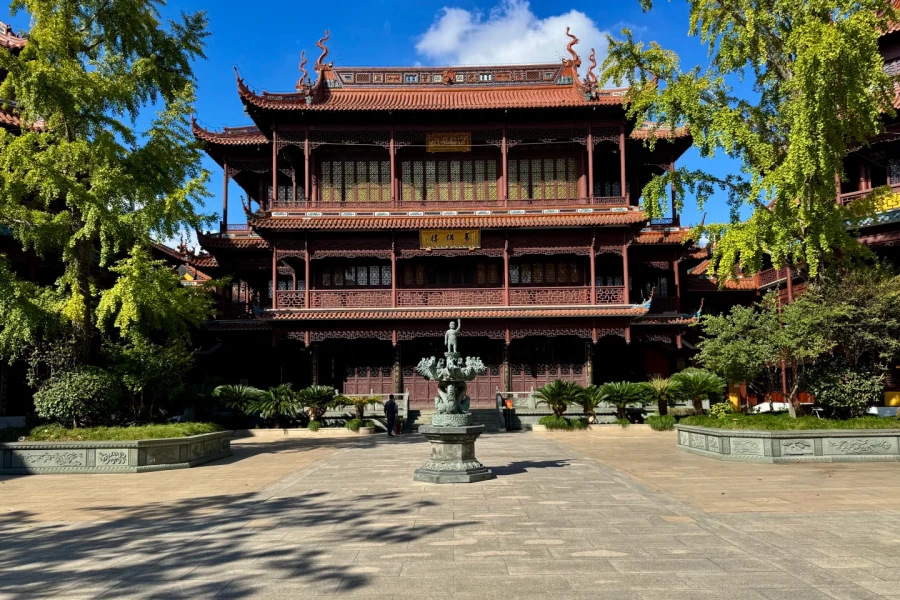
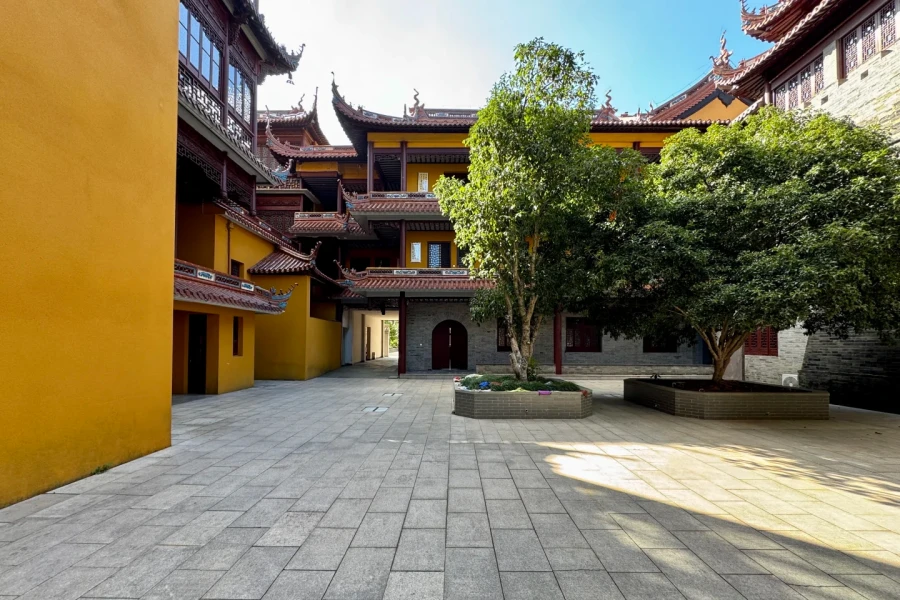
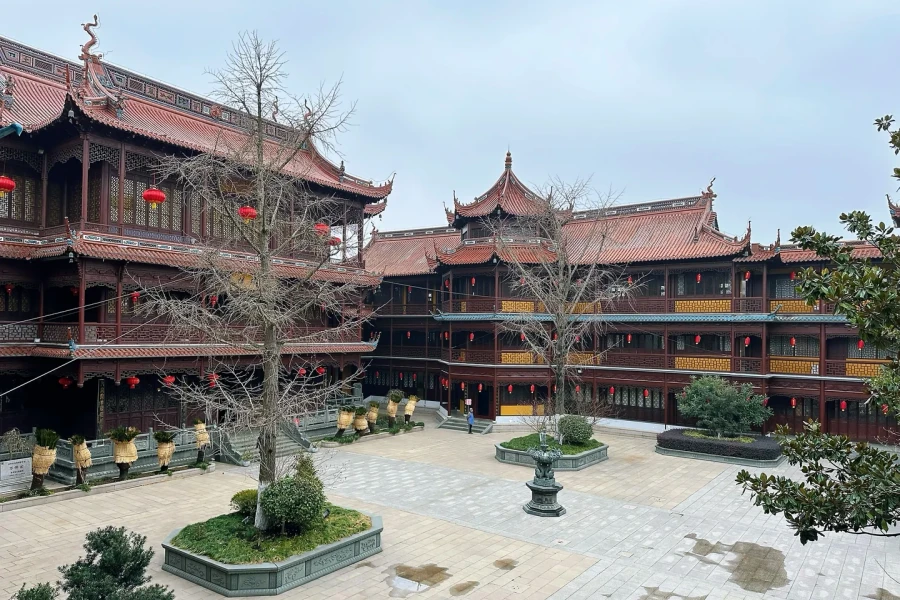
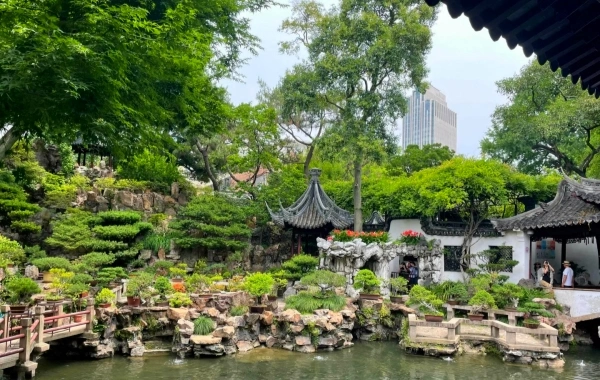
Despite its renowned architectural wonders, the temple grounds still feature tranquil courtyards. Ancient trees, incense burners, and stone benches dot the landscape, providing worshippers and visitors with a secluded space for quiet contemplation.

Humanistic craftsmanship – the integration of city walls and pavilions with the vastness of the golden Buddha
The buildings themselves are the largest cultural relics, while the interior of the temple is the most breathtaking interpretation of the temple's name.

The architectural marvel of the city and pavilions
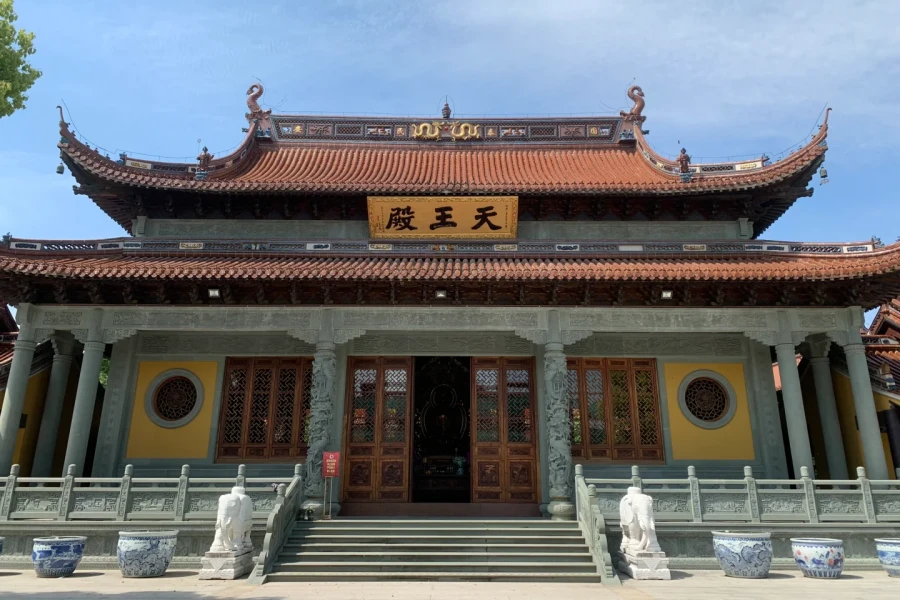
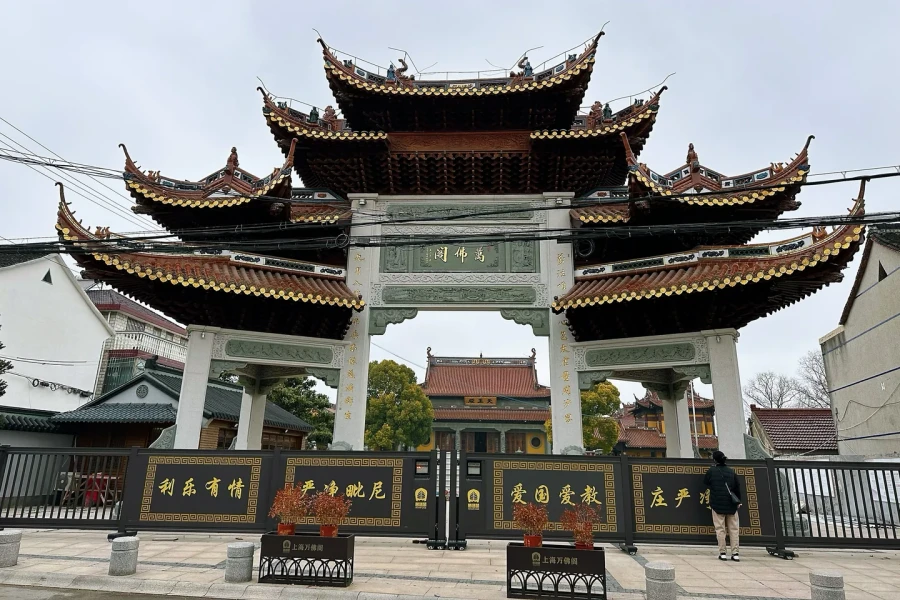
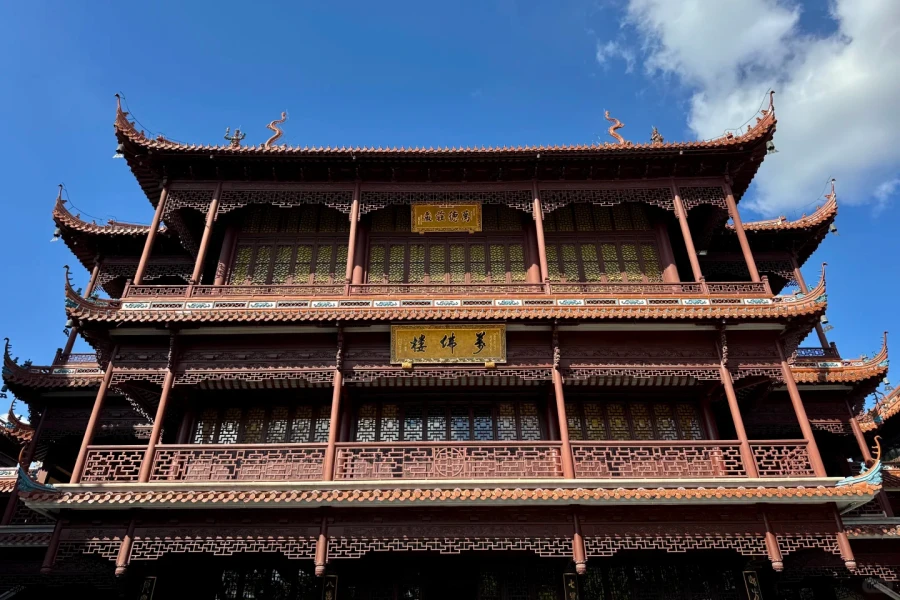
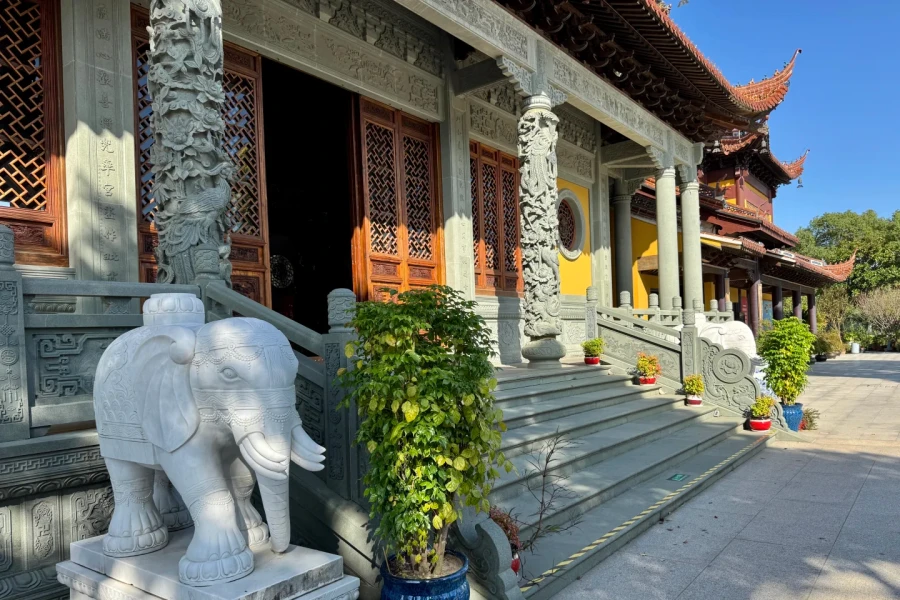
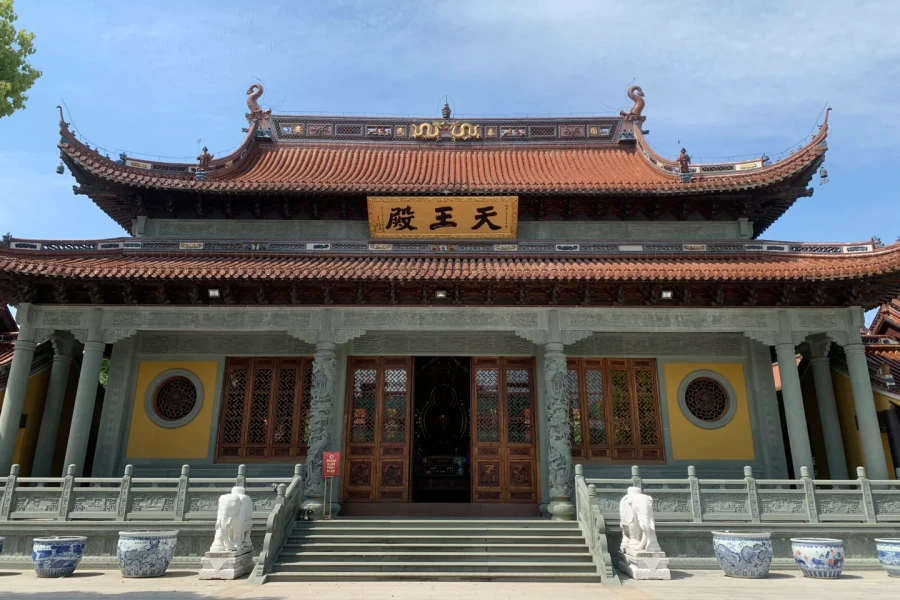
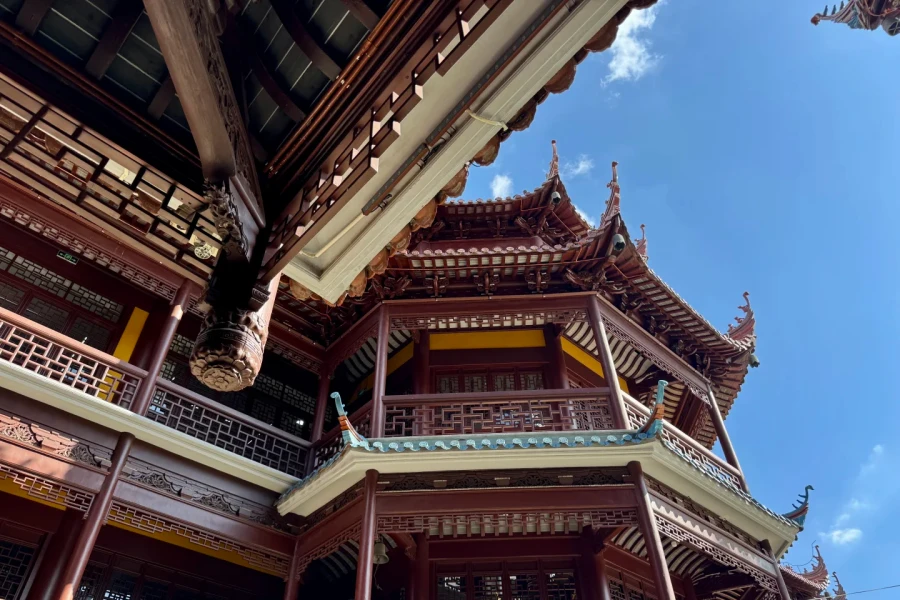
This is the most fundamental unique feature of Wanfo Pavilion. The main buildings of the temple, such as the mountain gate, the Hall of Heavenly Kings, and the Great Buddha Hall, do not rise from the ground, but are cleverly built upon and span the ancient brick and stone city walls. When visitors pass through the mountain gate, it is as if they are passing through the ancient city gate; when strolling through the halls, they are walking on the rammed earth of the city walls from hundreds of years ago. This symbiotic relationship between "architecture and ruins" is extremely rare among temples in China.

The visually stunning "Ten Thousand Buddhas Paying Homage" in the main hall
Inside the Mahavira Hall (or the dedicated Hall of Ten Thousand Buddhas), it is truly a world of "ten thousand Buddhas." The surrounding walls are densely covered with countless small niches, each containing a gilded bronze Buddha statue. Though small, the statues are exquisitely carved and arranged neatly. When the lights in the hall are turned on, the ten thousand golden Buddhas shine brilliantly, creating a magnificent and solemn scene of "ten thousand Buddhas paying homage," a powerful visual and spiritual impact.

Ancient city wall ruins
The temple itself is a "living" museum of the city wall. During the visit, you can clearly see the exposed bricks and stones of the Ming Dynasty city wall, the remains of the barbican structure, and the majestic scale of the ancient city wall, and feel the tangible warmth of history.

Photography Tips:
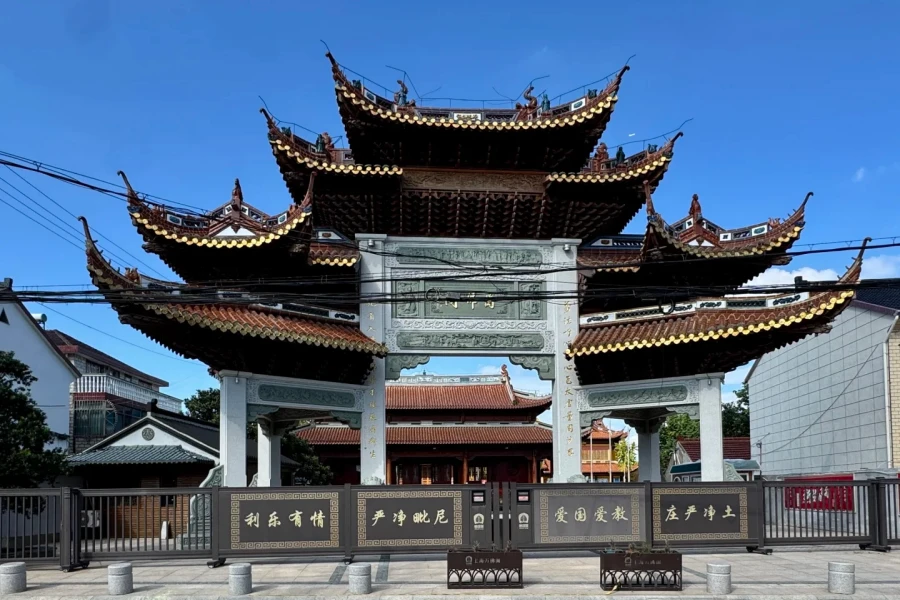
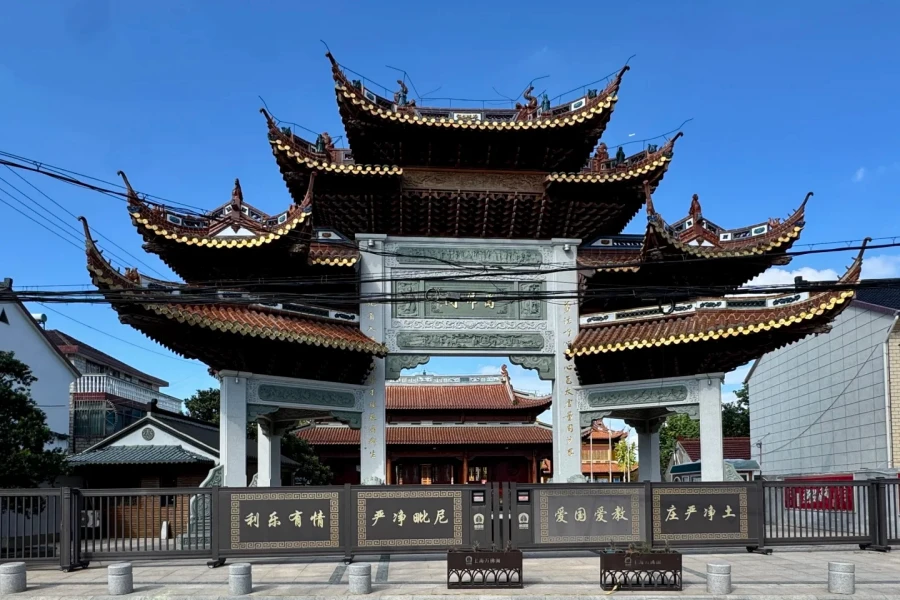
Architectural panoramic view: On the open ground opposite the temple, take a panoramic view of the Wanfo Pavilion standing majestically on the ancient city wall, highlighting its unique "pavilion on the city wall" form.
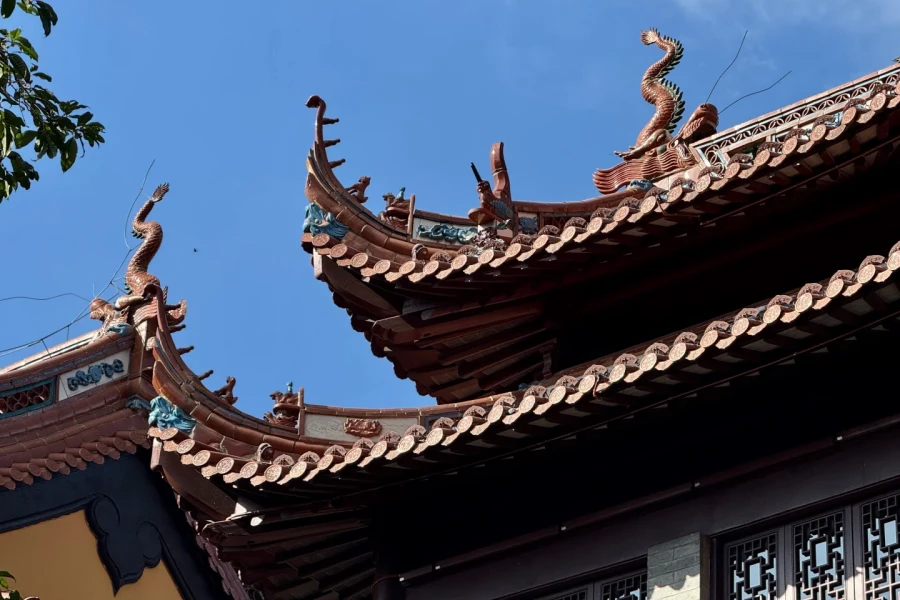
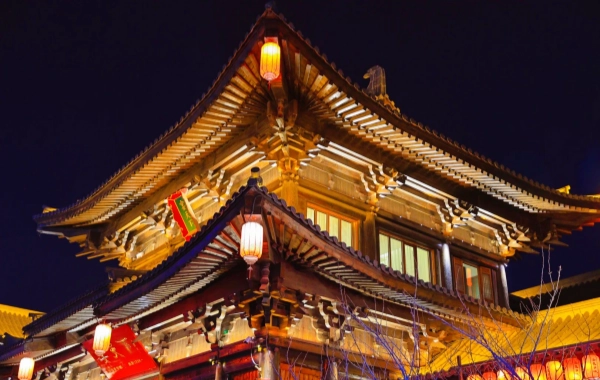
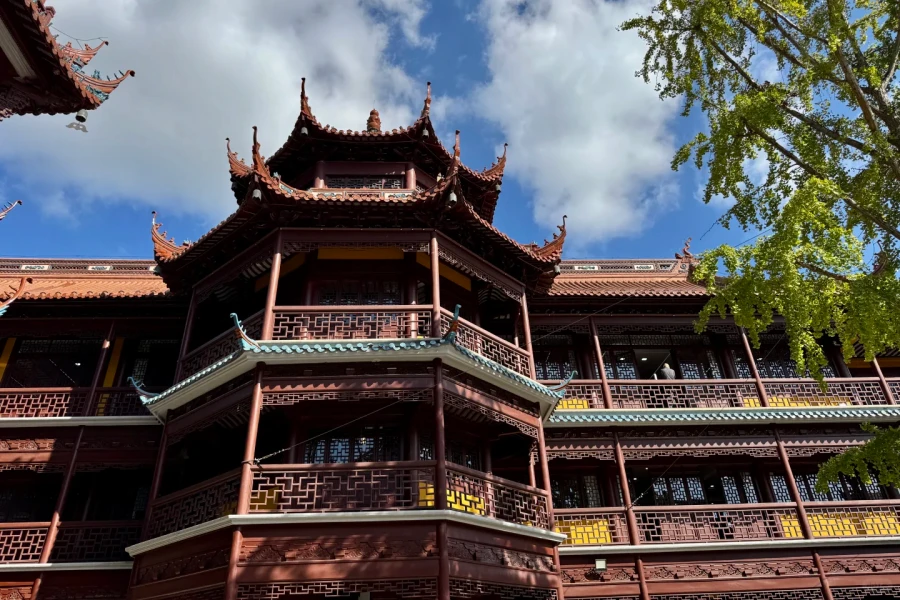
City Wall Perspective: Climb the city wall walkway and use the upturned eaves of the temple as the foreground to photograph the old town of Fengcheng in the background.
Indoor lighting: Provided permission is granted and flash photography is not used (temple regulations must be strictly followed), you can photograph the magnificent array of ten thousand golden Buddhas in the main hall under natural or artificial light, utilizing the sense of depth in the composition.
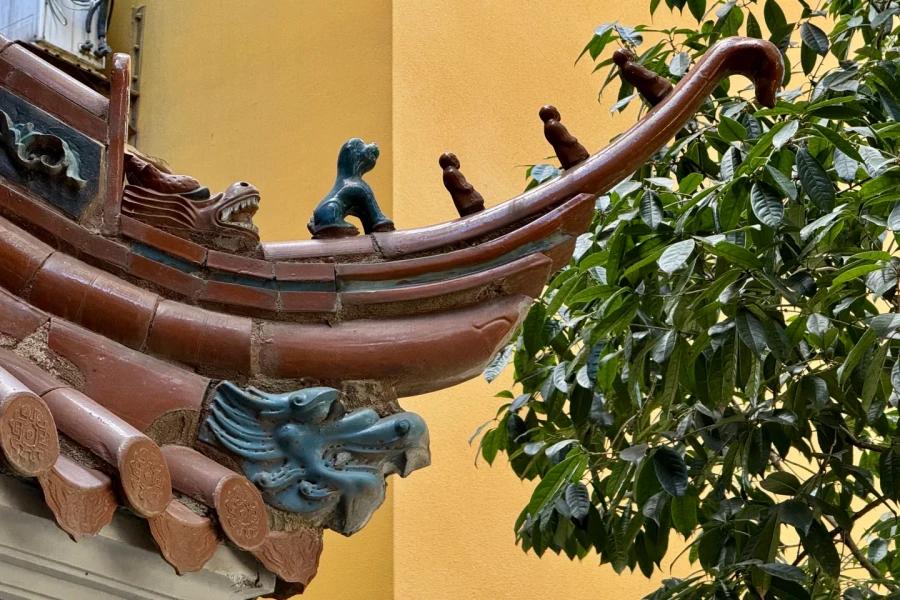
Close-up details: Focusing on historical details such as the texture of ancient city wall bricks and stones, the wooden brackets of palaces, and the exquisite stone column bases.

Core Experience: An Immersive Guide to a Buddhist Kingdom with City Walls

Furong Ancient Town Furong Ancient Town Furong Ancient Town Furong Ancient Town

Five things you must do to unlock the complete Ten Thousand Buddha Pavilion
1. Experience firsthand "passing through the city gate to enter the ancient temple".
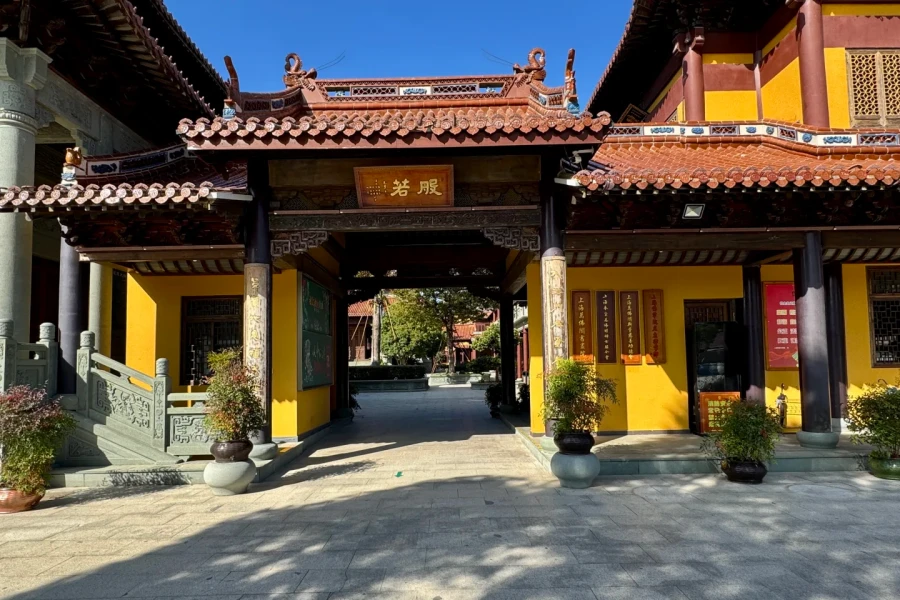
- Unique Pathway: The moment you enter through the mountain gate, you embark on a journey through time. You are consciously aware that you are passing through an ancient Ming Dynasty city gate and entering a temple in the sky. This spatial experience itself is like a time-space game.
2. Gazing up at the "Ten Thousand Buddhas Paying Homage," experiencing a microcosm of the Buddhist kingdom.
- Core pilgrimage: Stand quietly in the main hall for a moment, carefully gazing at the tens of thousands of small golden Buddha statues on the surrounding walls. Try to find the individual statues with slight differences in expression and gesture, and feel the subtle craftsmanship of the ancient artisans within the grand scale.
3. Climb the city walls and become a "guardian of the ancient city" for a day.
- Climb to a high place and reflect on the past: Be sure to climb the city wall or the outer corridor of a high palace. Lean on the railing and look into the distance, imagine that this place was once the front line of coastal defense where soldiers kept watch, and now it has become a quiet place to soothe the soul. A sense of vicissitudes will arise spontaneously.
4. Exploring the historical secrets hidden in the bricks and stones of the city wall
- Touch History: Within the temple grounds, pay attention to the ancient city walls beneath your feet and around you. Observe the size of the bricks and stones, the way they are laid, and even look for bricks that may bear ancient inscriptions, engaging in a silent dialogue with the builders of six hundred years ago.
5. Join a tour of Fengcheng Old Street to complete a historical puzzle.
- Cultural Extension: Wanfo Pavilion is the core of Fengcheng's history and culture. After the visit, walk to the nearby Fengcheng Old Street (Shizijie) to see the remaining old-fashioned features, ancient wells, and old houses, and understand the temple within the overall historical context of the ancient town.

Suggested tour routes
Half-day "Essential Historical Exploration" Tour (Core Experience):
Arrive at 9:00 AM → Enter through the mountain gate and experience the ritual of "passing through the city gate" → Visit the Hall of Heavenly Kings → Focus on the Mahavira Hall (Hall of Ten Thousand Buddhas) and immerse yourself in the wonder of ten thousand Buddhas (allow ample time) → Follow the signs to climb the ancient city wall ruins, stroll around the pavilion, and overlook the surrounding scenery → Visit other side halls (such as the Guanyin Hall) → Take a short rest in the courtyard → End around 11:00 AM.

A one-day in-depth tour of Fengxian's charm (recommended):
- Morning: Focus on a combined tour of Wanfo Pavilion and Fengcheng Old Street. After exploring the temple in depth, stroll along the old street and feel the charm of the ancient town.
- Lunch: Enjoy local farm-style dishes in Fengcheng Town.
- Afternoon: Drive to Shanghai Haiwan National Forest Park (approximately 30 minutes). Relax amidst the vast forests, lakes, and meadows, experiencing the transition from rich history to natural ecology. Enjoy the flowers in spring and the foliage in autumn.
- Evening: If it is summer, you can take a walk on the nearby blue sea and golden sand beach to end a fulfilling day.

IntoTravelChina's advantages: We can book the most suitable accommodations for you, arrange all the connections between activities, and provide detailed hiking route maps and safety guidelines.
Professional Guide: IntoTravelChina offers personalized itineraries, including a dedicated guide, transportation, and activity arrangements, ensuring a worry-free and in-depth travel experience. >> [Inquire Now for a Customized Itinerary]

Complete Travel Guide: Transportation, Seasons, and Etiquette

Furong Ancient Town Furong Ancient Town Furong Ancient Town

How to get there: A visit to the outskirts of Shanghai
Wanfo Pavilion is located in Fengcheng Town, Fengxian District, which is a remote suburb of Shanghai. It is more convenient to drive or use a combination of transportation.
- Public transportation (subway + bus):
1. Take Metro Line 5 to "Fengxian New Town Station".
2. After exiting the station, take bus "Fengxian Line 1" or "Naantuan Express" to "Fengcheng Police Station" or "Fengcheng Hospital" station, then walk for about 10 minutes. The whole journey takes about 1.5-2 hours.

- By car (recommended): Navigate to "Wanfo Pavilion (Fengxian)" or "Fengcheng Town North Gate". From the city center, take the S4 Shanghai-Jinhua Expressway or the G1503 Shanghai Ring Expressway, and exit at "Fengcheng". The journey takes approximately 1-1.5 hours. There is parking available next to the temple.
- Tourist bus routes: There are currently no direct tourist bus routes. It is recommended to drive yourself or hire a car.

Best time to visit
Wanfo Pavilion is suitable for all seasons, but it is best to visit on a sunny day and at the right time.
- Spring and autumn (March-May, September-November): The weather is pleasant, making it the best season to visit. Avoiding holidays allows you to enjoy a quieter visiting environment.
- Summer mornings or evenings (June-August): It is recommended to arrive early in the morning to avoid the afternoon heat. The temple buildings are relatively cool.
- Winter (December-February): Fewer tourists, the ancient city walls and temples under the sunlight possess a unique, weathered, and solemn beauty. Please dress warmly.
- Buddhist festivals: The first and fifteenth days of the lunar calendar, as well as the birthdays of Buddhas and Bodhisattvas, are when temples hold many religious ceremonies, the incense is burning brightly, the atmosphere is strong, but there are also many people.

Etiquette and Practical Information
- Admission: Wanfo Pavilion is free of charge; visitors are welcome to enter and pay their respects.
- Opening hours: Usually 8:00-16:30, but the specific time may vary slightly depending on the season.
- Temple Etiquette:
1. Dress neatly: Avoid wearing overly revealing or casual clothing such as tank tops, shorts, and slippers.
2. Keep quiet: Please do not make loud noises or run around inside the hall.
3. Respect for the Dharma: Do not take photos of Buddha statues inside the main hall where ten thousand Buddhas are enshrined without explicit permission (photography of the exterior buildings is permitted). This is a basic matter of religious respect.
4. Rules for entering and exiting: Do not step on the threshold when entering or exiting the hall.

IntoTravelChina Service Recommendations:
The value of Wanfo Pavilion lies in its unique historical architecture and religious art; without a guide, it's easy to miss the highlights. Through us, we can arrange a guide familiar with local history and Buddhist culture to explain the construction history of the city wall, the architectural secrets of Wanfo Pavilion, and the Buddhist doctrines behind the "Ten Thousand Buddhas." For tourists who wish to efficiently connect various attractions in Fengxian, we also offer comfortable self-driving or chartered car services. >> [Click to contact an IntoTravelChina travel consultant]

Extended Journey: Cultural and Ecological Loop in Fengxian District and Surrounding Areas of Shanghai

Furong Ancient Town

Wanfo Pavilion is an excellent entry point for exploring cultural tourism in Fengxian District of Shanghai and even the north bank of Hangzhou Bay.

- Fengxian History and Culture One-Day Itinerary: Wanfo Pavilion (Buddhist Temple built on Ming Dynasty city walls) → Fengcheng Old Street (Ancient Town Charm) → Shen Family Garden (Former Residence of Modern Celebrities in Fengxian) → Yanzi Ancestral Hall (Source of Fengxian's "Virtuous Culture"). This itinerary focuses on the local history and culture of Fengxian.
- Shanghai Southern Coastal Eco-Tour: Wanfo Pavilion (morning cultural exploration) → Shanghai Haiwan National Forest Park (afternoon eco-tourism) → Fisherman's Wharf/Azure Sea and Golden Sands (evening seaside stroll). A day trip that combines cultural exploration with natural relaxation.
- Comparison of ancient towns and temples in southern Shanghai (2-day itinerary):
- Day 1: Songjiang Fangta Park & ​​Xingshengjiao Temple Pagoda (ancient pagoda from the Song Dynasty) → Sijing Ancient Town → Overnight stay in Songjiang or Fengxian.
Day 2: Fengxian Wanfo Pavilion (Ming Dynasty City Wall Temple) → Qingcun Ancient Town (or Zhuangxing Ancient Town). Compare the ancient towns and temples of Shanghai from different historical periods and with different architectural styles.>>Contact us to customize the above related itinerary

Join hands with IntoTravelChina to start your journey to explore the Buddhist kingdom of the city walls

Furong Ancient Town

The story of the Ten Thousand Buddha Pavilion is about the peaceful turn of a military fortress, a grand vow of "Ten Thousand Buddhas", and a wisdom of symbiosis and co-prosperity between architecture and ruins. IntoTravelChina focuses on creating a deep, personal, and hassle-free Chinese cultural travel experience. Our travel experts can help you:
- Tailor-made itinerary: Design exclusive travel itineraries that focus on ancient archaeology, Buddhist art, or the suburbs of Shanghai based on your interests.
- One-stop service: Solve suburban transportation connections, professional explanation guides, special dining recommendations and tickets to surrounding attractions.
- Exclusive experience: Arrange in-depth explanations from scholars who have studied ancient architecture, or explore passages of the ruins of the city wall that are generally closed to the public (if possible).

Make your trip to the Ten Thousand Buddha Pavilion more than a simple visit, but also an in-depth cultural exploration of deciphering history and understanding architectural wisdom.
> Start planning your journey today
> Welcome to contact our professional travel consultants, we will provide you with an exclusive itinerary plan and quotation within 24 hours. >> [Click to contact IntoTravelChina Travel Consultant]

Recommended Tours

Top 3 tours chosen by most customers to explore in the best way. Check the detailed itinerary, or tailor your own trip now with us.

Zhangjiajie Tour
Beijing Guilin Shanghai 9-Day Tour

9 Days  |  Beijing-Guilin-Shanghai

Zhangjiajie Tour
9-Day Shanghai-Zhangjiajie-Guangzhou Adventure

9 Days  |  Shanghai - Zhangjiajie - Guangzhou

Zhangjiajie Tour
The Imperial Triad: Shanghai, Luoyang & Beijing

8 Days  |  Shanghai - Luoyang - Beijing

What Our Clients Say?

Based on 10,000+ traveler reviews

...
Daniel Dorothea
Canada
Reviewed on April 29,2025
Shopping on Nanjing Road in Shanghai was just amazing! It's truly the "First Commercial Street of China", where tradition and modernity blend perfectly. You can find awesome souvenirs and experience the trendy vibes in cool stores. The neon lights at night are just spectacular, shining bright like Times Square in New York. The food here is incredible too. I had a feast for my taste buds. Shanghai, I'll definitely be back!
Destination(s): Shanghai
Date of Experience: May 08,2024
...
...
Elvis Eva
Canada
Reviewed on June 20,2025
As a solo traveler from Canada, I was nervous about navigating China alone—but this 11-day tour was PERFECT! From hiking the Great Wall at sunrise (Day 3) to gasping at the Terracotta Army (Day 5), every day delivered ‘pinch-me’ moments. The real showstopper? Zhangjiajie’s Avatar Mountains (Day 7)! Our guide made the stone pillars come alive with stories. Massive thanks for handling all logistics—bullet train tickets, entry passes, car! And the 4-star hotels surprised me.
Destination(s): Beijing Xian Zhangjiajie Shanghai
Date of Experience: June 02,2025
... ... ...
...
Simon
America
Reviewed on May 29,2025
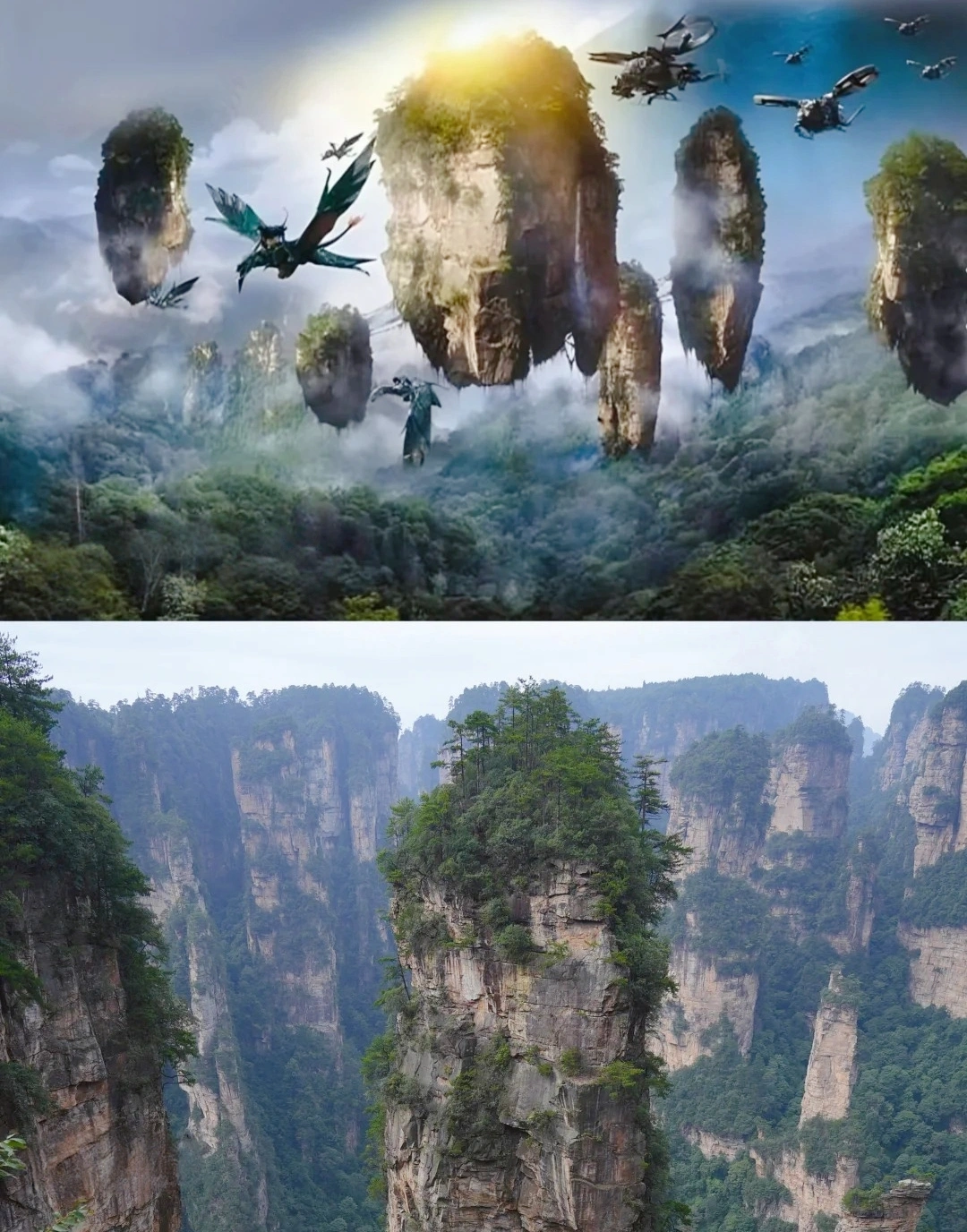
Our 2-day Zhangjiajie tour was beyond spectacular! As someone who’s visited Beijing and Shanghai for work, this trip revealed China’s wild, magical heart. Day 1 in Zhangjiajie National Forest Park felt like stepping onto Pandora—I’m a huge Avatar fan, and Yuanjiajie’s floating peaks left me breathless. The misty pillars and lush valleys like pure movie magic! Then came Fenghuang Ancient Town, we eat dinner beside the thundering waterfall. It seems Unreal! The night views of stilt houses glowing over the river were straight from a fairy tale. For fellow Avatar lovers and adventure seekers: Don’t miss this bucket-list experience! 10/10 would return. A Well-Traveled Film Buff, May 2025
Destination(s): Zhangjiajie
Date of Experience: May 08,2025
... ...

Ask a Question

Question Summary (100 characters)
Details (optional) (2,000 characters)
Name
Country
Email