Natural Creation—The City's Breathing Amidst Blue Sea and Sky
The natural landscape of Shapowei is an eternal dialogue about the sea,the city,and light and shadow.
The Vibrant Waters:The Breath and Pulse of the Typhoon Shelter
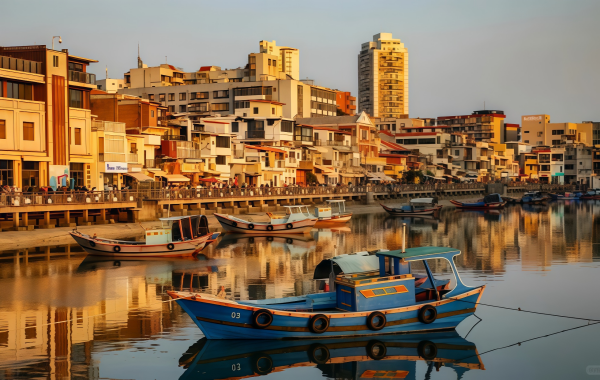
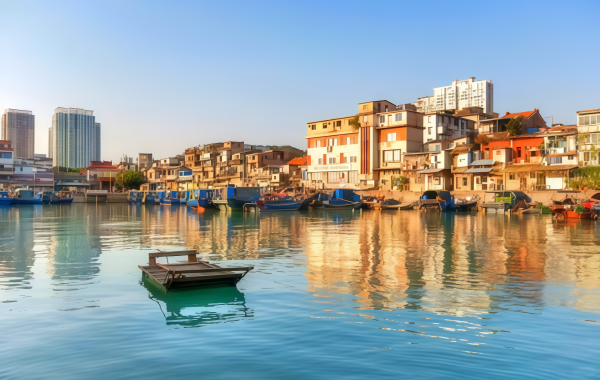
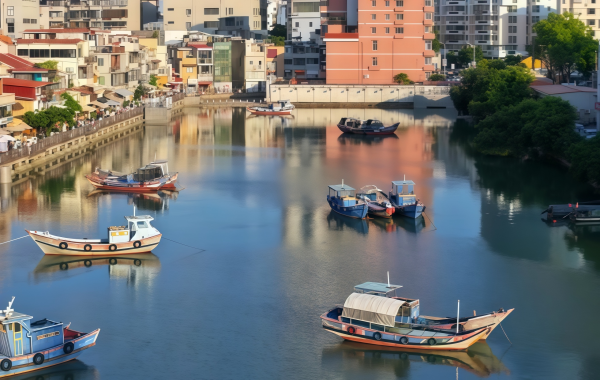
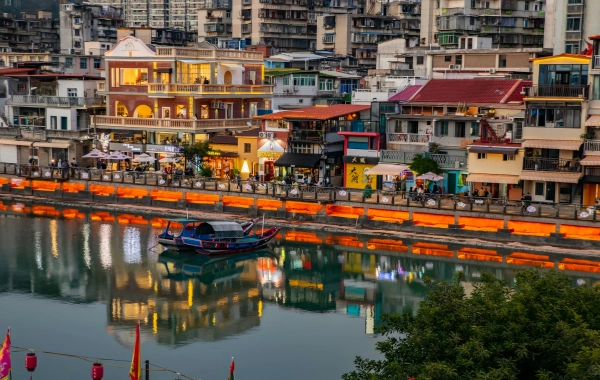
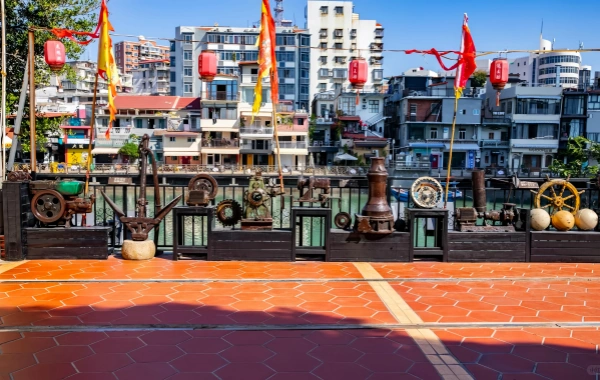
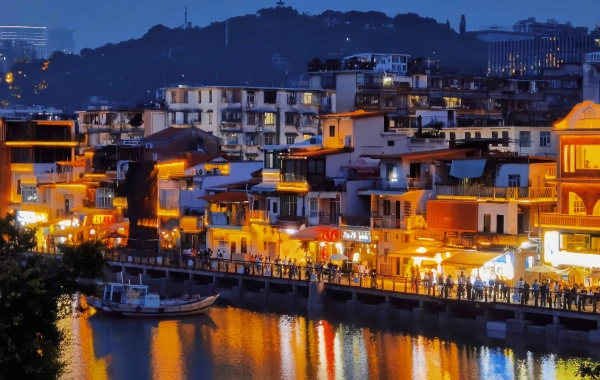
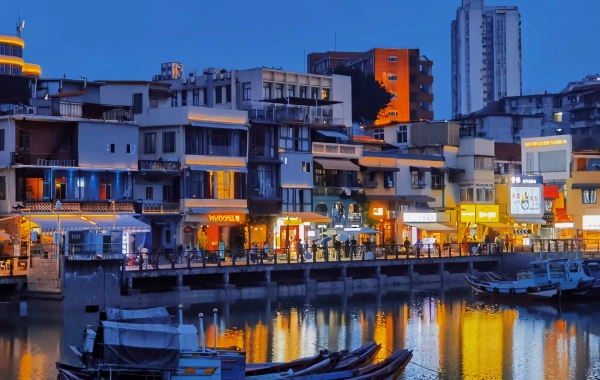
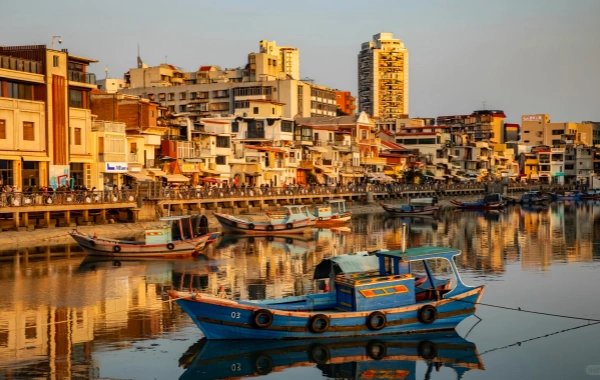
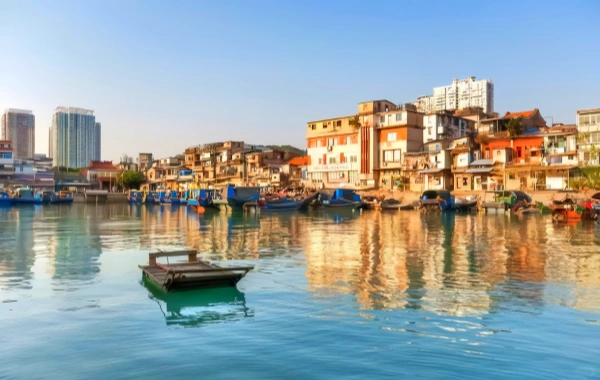
The Typhoon Shelter:As the soul of Shapowei,this 28,000-square-meter lagoon has witnessed countless fishing boats returning home.Today,the weathered fishing boats and the arcade buildings on the shore are reflected in its waters,with egrets perching in twos and threes on the bows.The water is calm,yet full of stories.The best time to view it is at sunset,when the setting sun gilds the water,and the silhouettes of the Twin Towers and old fishing boats are framed together.
Yanwu Bridge Viewing Platform:Adjacent to the entrance of the typhoon shelter,it is an excellent location for viewing the Xiamen Bay.From here,you can see Gulangyu Island in the distance and watch massive ships leaving the harbor.The sea breeze caresses your face,and your heart is filled with peace.
Rugged Rocks:Geological Notes Between Mountains and Sea
Hongshan Giant Rock Group:Located in Hongshan Park behind Shapowei,this group of granite giant rocks was formed by Yanshanian magma activity 100 million years ago.Weathering and erosion have sculpted them into countless shapes.The mountains are dotted with historical sites.Climbing to the top of Hongshan Pavilion offers a panoramic view of Xiamen Harbor,overlooking Shapowei and Gulangyu Island.
A Narrow Gorge:A natural crevice between towering rocks;walking through it allows you to feel the powerful force of geological movement.
A Hidden Green Paradise:A natural oxygen bar in the heart of the city
Hongshan Park:A short walk from Shapowei,a few alleyways will take you to the mountains.Shady trees provide a popular spot for Xiamen locals to enjoy tea and panoramic views.For just 20-30 yuan,you can brew a pot of tea and gaze out at the Shapowei typhoon shelter to your left.
Memorial Forest:Planted in 1937 by soldiers and civilians,this memorial forest has grown into a towering tree,witnessing the reconciliation between the city and nature.
Shapowei's natural landscape is more than just"viewing";it's about"walking"and"discovering."The seamless transition between mountains,sea,and city is the unique DNA of this city.
Humanistic Craftsmanship–A Living Museum Born from the Shore
The architecture here is not merely dwelling,but a slice of civilization from a 600-year-old fishing port.
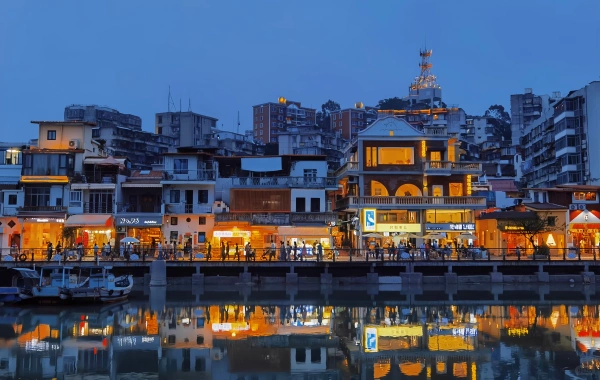
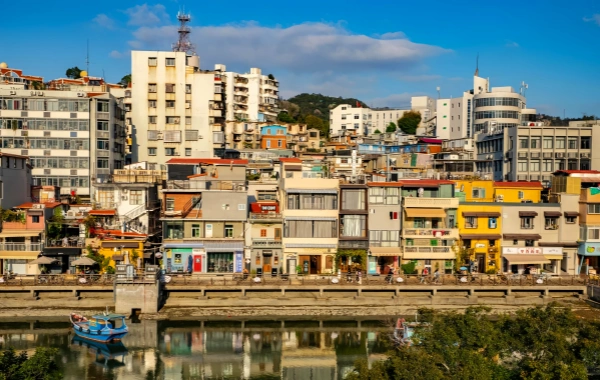
Typhoon Shelter and Arcade Buildings:The arcade buildings along the waterfront are a wonderful blend of traditional Minnan style and modern design.The mottled walls and old window frames,every brick and tile tells a story of the fishing port's past.The renovation followed the principle of"restoring the old as it was,"preserving the original texture and allowing history and modernity to coexist here.
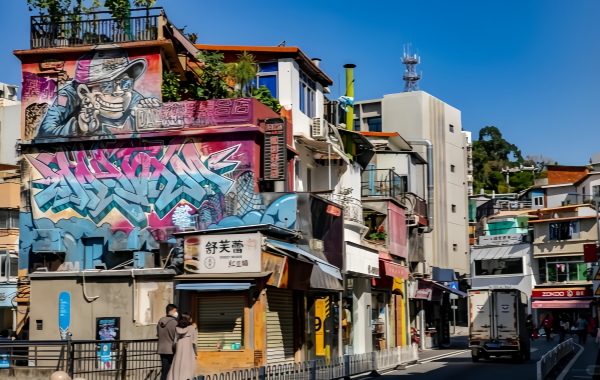
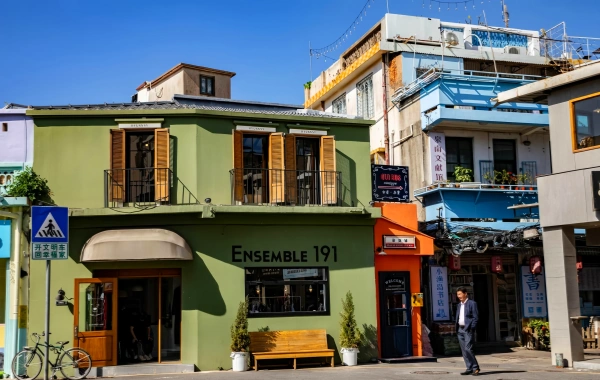
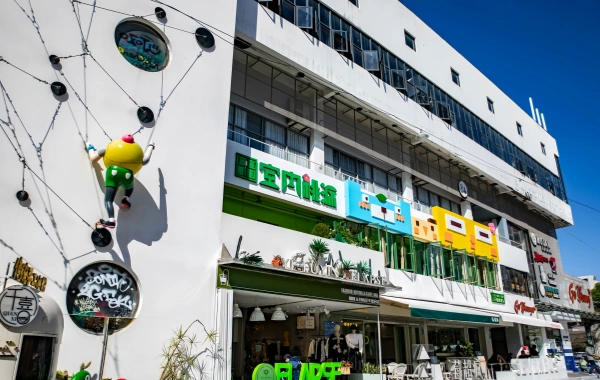
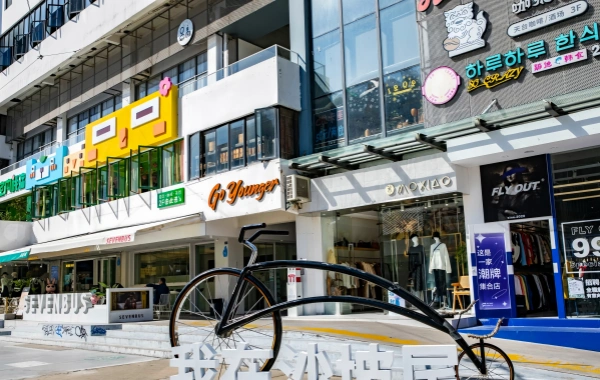
Art West District:Transformed from the former Xiamen Seafood Processing Plant,it opened in 2014 as the first demonstration project of the"Shapowei Marine Culture and Creative Port."Within the gray and white-toned buildings are free studios for sculpture,ceramics,and printmaking,as well as Xiamen's first professional skate park(Haven Skatepark)and a Real Live music venue.This is like fresh blood flowing beneath the ancient skin of Shapowei.
Xiamen University and Cat Street:Adjacent to Xiamen University,one of China's most beautiful campuses,Shapowei and Ding'aozai Cat Street are connected,forming an artistic matrix in the Xiamen Port area.
The Living Heritage Exhibition Hall and the Xiamen Port Maritime Culture Exhibition Hall,opened successively in 2018 and 2019,comprehensively document the history of Shapowei,recounting the customs of the Tanka people and intangible cultural heritage such as the"Sending Off the King Boat,"serving as a window into the fishing port culture.
Jiangcuo and the Li Clan Ancestral Hall:These Qing Dynasty red-brick mansions and century-old ancestral halls are hidden deep within the streets and alleys.Jiangcuo was once the most magnificent red-brick mansion on Xiamen Island,and the Li Clan Ancestral Hall is as famous as the Jiangxia Hall in Xiamen.It was once home to Li Weixiu,the Xiamen version of"Mei Lanfang"(a famous Taiwanese comedian).
Huxi Rock Temple and Bailudong Temple:Ancient temples nestled in the mountains,Buddhist sites of great significance.Huxi Rock Temple is where the eminent monk Yin Yuan,from the late Ming and early Qing dynasties,traveled to Japan to spread Buddhism.The temple is filled with cliff carvings,and Wang Leehom once made a special trip here to find his great-grandfather's calligraphy.
Photography Tips:
Shoot portraits against the light and capturing the reflections of fishing boats on the typhoon shelter bridge;The rooftop of the Art West District offers panoramic views of both the Twin Towers and the typhoon shelter;The food alleys after nightfall,bathed in soft lighting,create a unique street photography atmosphere;Hongshan Pavilion offers a panoramic view of Xiamen Harbor,best viewed at sunset.